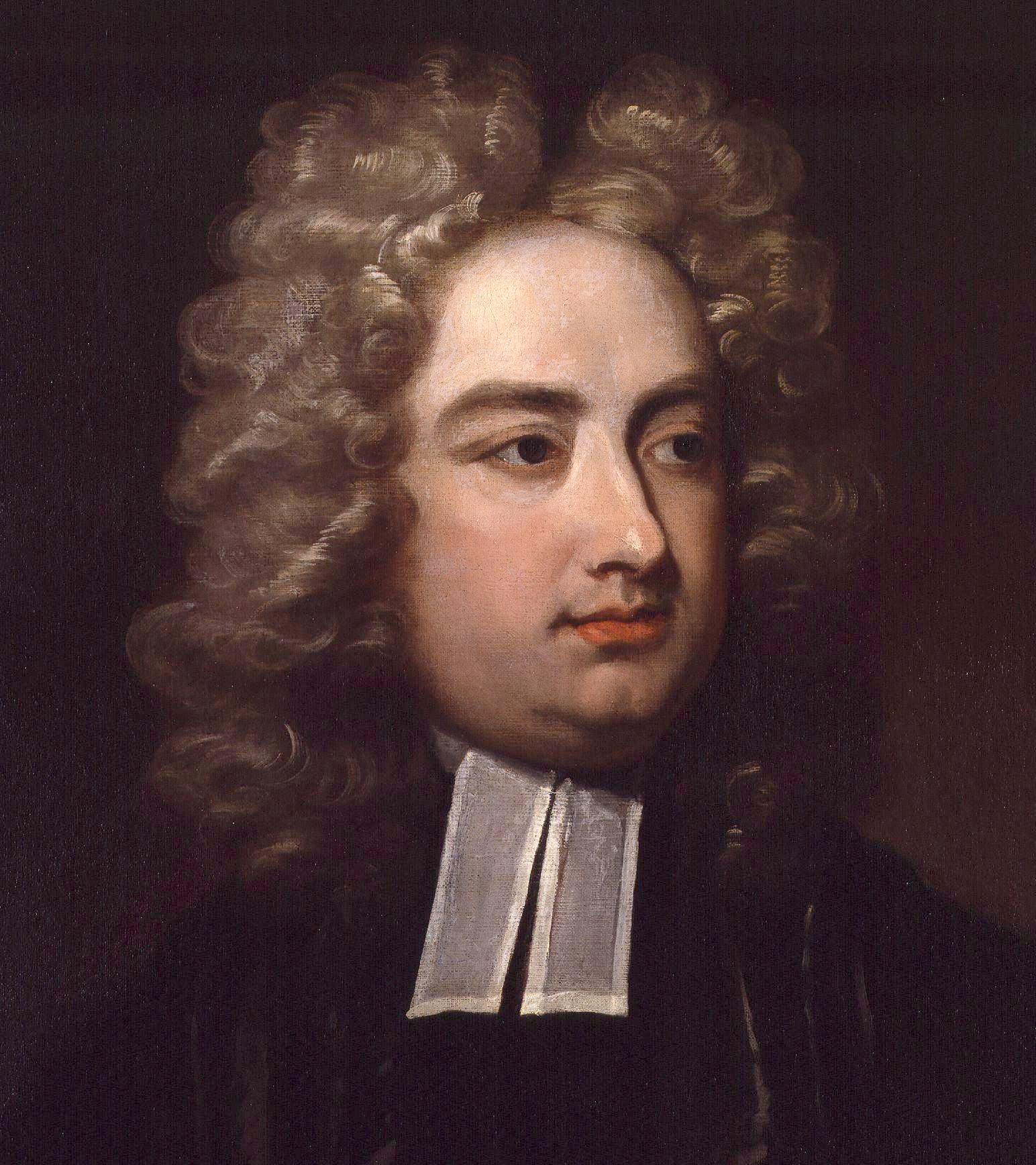

Swift was an ordained Priest in the Anglican Church and served as dean of St Patrick’s Cathedral for much of his life. In between writing sermons and performing his church duties, he was a satirist and a prankster. A truly amazing wit whose biting satire is still alive today.
He is best known for Gulliver’s Travels, but it’s the children’s version we all have read or have seen on television, and few, with the exception of literature majors, know of his scatological sense of humor. Scat, by the way, is “poop.”
An entire chapter in Gulliver’s Travels focuses on the labor and laborers who carted Gulliver’s massive poo out of town each day. And when the royal palace of Lilliput caught on fire he didn’t drink wine and spit on it to dowse it out, as some versions go, but rather he pulled out his johnson and peed on the fire. This violated the emperor and empress’ sense of propriety. The empress was so disgusted she refused to set foot in the palace again . . . which would have burned to the ground if not for Gulliver.
Here we see Swift’s specialty, critiquing human behavior and societal norms.
In the early 1700s, the British complained that the Irish were producing too many children. The reality was that the people of Ireland were living in extreme poverty and being exploited under British rule. It’s an old story of economic inequality, lack of empathy from the ruling class, and the abuse of power. It’s such an old story it should have been put to music by now. This was the subject Jonathan Swift took on in A Modest Proposal. It is truly biting satire in which he proposes that impoverished Irish families should sell their children as food to the wealthy. I still remember the first time I read it. My eyes widened, something tried to escape my throat, and the only phrase rattling around in my skull was: fucking brilliant.
You can read the whole thing by clicking on that link above, but by way of introduction: Swift starts out describing the situation, the poverty and children clinging to their mothers’ skirts begging for alms, and before making his proposal, he states that he has nothing to gain from this as he has no children. Then comes the really great sentence:
I have been assured by a very knowing American of my acquaintance in London, that a young healthy child well nursed, is, at a year old, a most delicious nourishing and wholesome food, whether stewed, roasted, baked, or boiled; and I make no doubt that it will equally serve in a fricasee, or a ragoust.
He certainly does grab the reader’s attention. Underpinning this grotesque and absurd proposal, is the simple fact that people are suffering, and through wit and satire, he forces the reader to confront the harsh realities of that period.
But before he wrote Gulliver’s travels or this wonderful biting essay, he pulled off an April fool’s prank that is still considered one of the greatest to this day.
April Fool’s Day
On this day (April 1st), in 1708, Jonathan Swift inflicted one of the first public April Fools hoaxes on readers.
It was as brutal as you’d expect from him.
In Swift’s day, Almanacs were all the rage. Today, we think of them like Ben Franklin’s Poor Richard — collections of pithy witticisms paired with weather forecasts for farmers.
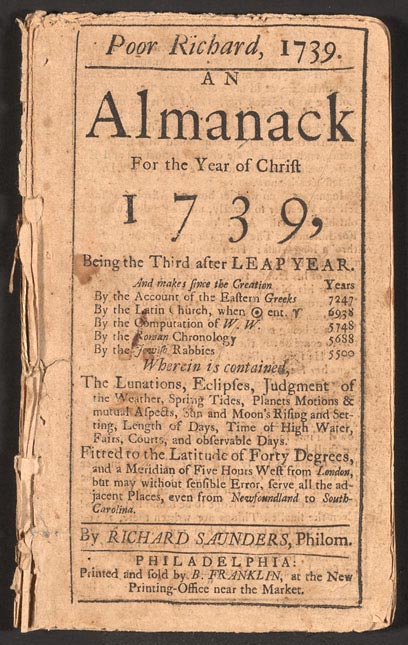
But back then, they were horoscopes . . . with an agenda.
The most popular was John Partridge’s.
Partridge was a cobbler by trade who, in the heady days of Restoration-era England, remade himself as a man of (pseudo-)science.
Declaring himself an expert astrologer (and all *other* astrologers frauds) and a “Physician to the King,” he started publishing horoscopes.
Partridge’s almanac, the Merlinus Liberatus, was popular because it was radical.
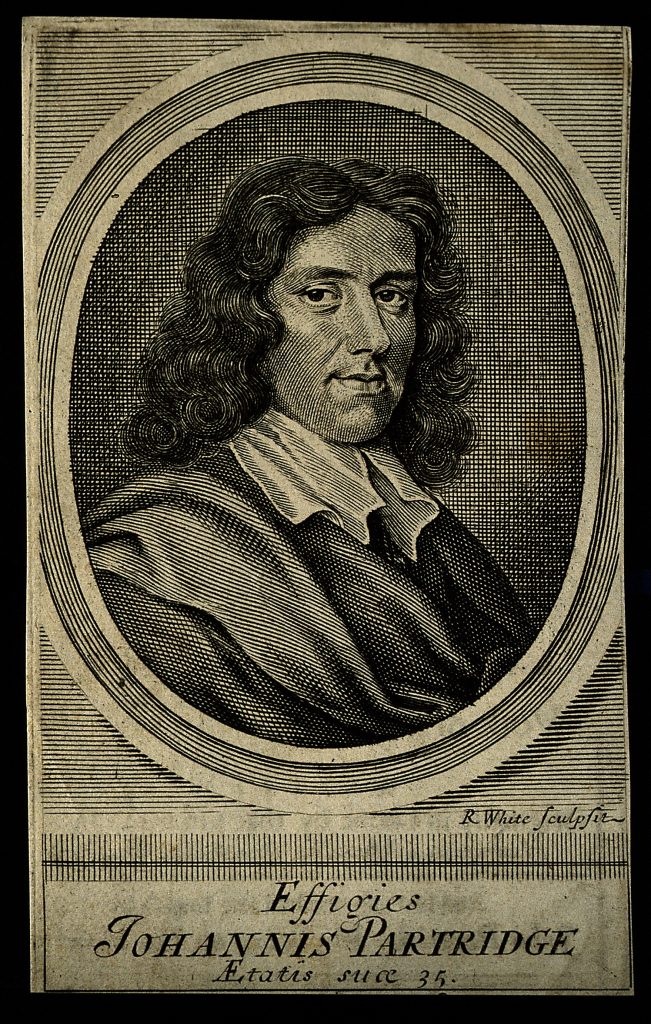
He’d read celebrities’ star charts & (incorrectly) predict their deaths.
He’d also slip in attacks on the Church of England.
Swift, a cleric, wasn’t a fan.
And made him his target.
Swift planned an elaborate long con:
He created an alter-ego, “Isaac Bickerstaff Esq,” a hot new astrologer.
Bickerstaff’s Almanac, a clear parody of Partridge’s, would debut with a bold opening prophecy:
John Partridge will die at 11PM on March 29th.
To build buzz, Swift placed “sock-puppet” (a false identity, very common today online) denunciations of “Bickerstaff” as a quack in other papers.
On Mar. 30, “Bickerstaff” published a solemn update:
Partridge had indeed died on the 29th (albeit at 7PM, not 11) and confessed himself a fraud on his deathbed.
By All Fool’s Day (April Fools Day to us), Swift had run Partridge’s obituary in another paper, and he sent an undertaker to Partridge’s home to collect the body.
Fake tributes to the late Mr. Partridge rolled in. People fell for it. Partridge’s own publisher believed him dead. News spread to the continent, and Portuguese Inquisitors denounced “Isaac Bickerstaff Esq” as a sorcerer and burned his Almanac.
Meanwhile, Partridge was beside himself, writing furiously, trying to convince everyone he was still alive.
His reputation never recovered.
Among England’s literary set, he became an object of mockery.
Steele and Congreve skewered him.
From Microsoft’s Copilot, I learned who these two were:
Richard Steele and William Congreve were prominent figures in English literature and drama during the late 17th and early 18th centuries:
- Richard Steele: Steele was an essayist, playwright, and politician. He is best known for co-founding the influential periodicals The Tatler and The Spectator with Joseph Addison. These publications aimed to entertain and educate readers, blending wit, social commentary, and moral philosophy. Steele also wrote plays, such as The Conscious Lovers, which contributed to the development of sentimental comedy.
- William Congreve: Congreve was a playwright and poet, celebrated for his contributions to Restoration comedy. His works, such as The Way of the World and Love for Love, are known for their sharp wit, sophisticated dialogue, and exploration of social manners. Congreve’s plays remain highly regarded as masterpieces of English drama.
Swift continued to refer to him as “the late, John Partridge” in print, as a running gag.
Partridge didn’t publish the Merlinus Liberatus again until 1714. He included a personal condemnation of Swift for perpetrating the hoax against him.
When Partridge did die in 1715 — for real — few took note.
After his death, Swift wrote this ode to the late Mr. Partridge:
Here, five feet deep, lies on his back
A cobbler, starmonger, and quack,
Who to the stars in pure good will
Does to his best look upward still:
Weep, all you customers that use
His pills, his almanacks, or shoes.