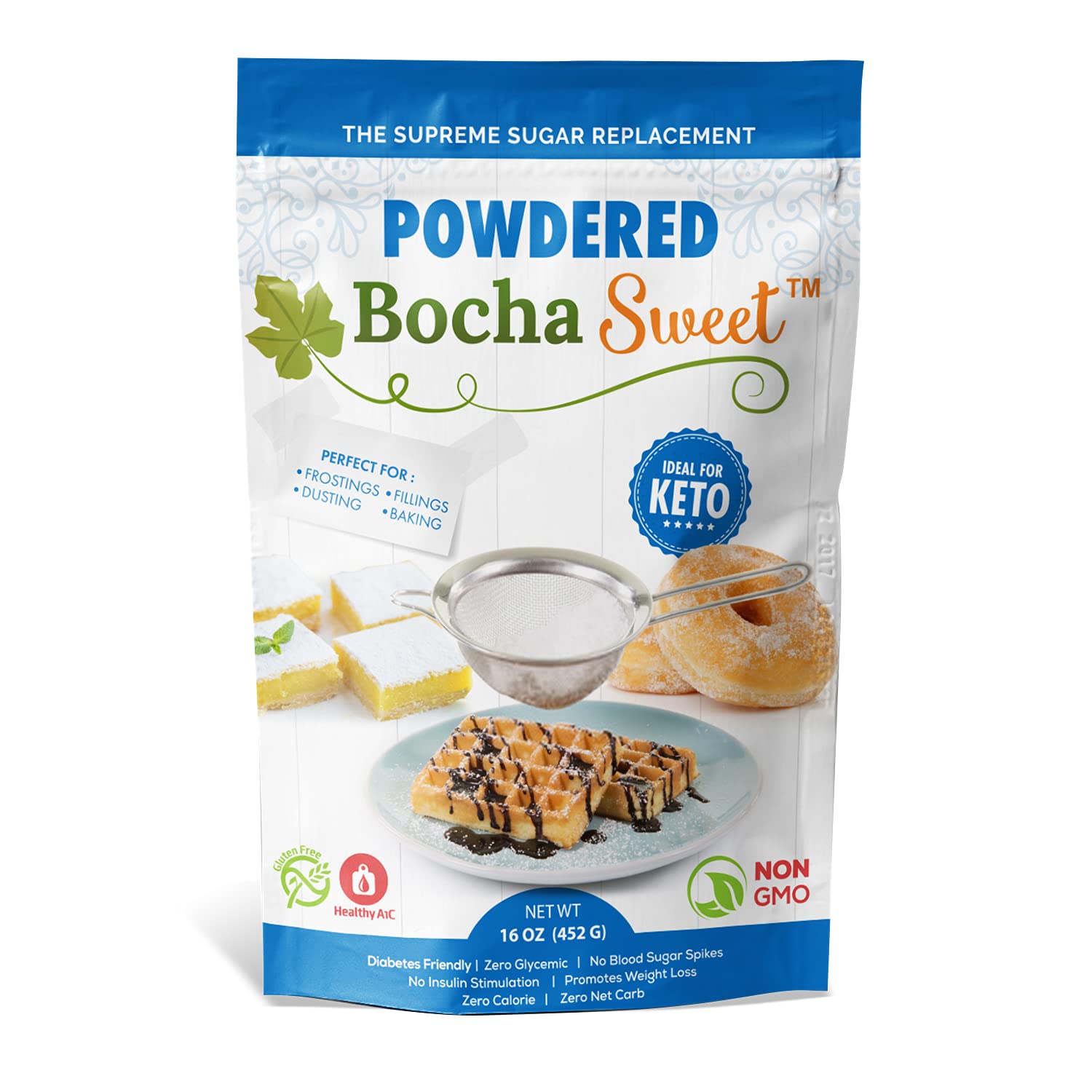

Because diabetes is epidemic in this world (more than half a billion people live with diabetes [Ref]) alternative sweeteners have become enormously popular. We’ve posted recipes that are low carb and use some of these. However, from what I have recently learned about BochaSweet, I’ve been inspired to toss out all my alternative sweeteners and use this one exclusively.
BochaSweet is an extract from (what is often referred to as) a Japanese pumpkin called kabocha. When I first wrote about this sweetener, it was referred to as just that, and the sugar was referred to as a pentose, a monosaccharide (simple sugar) with five carbon atoms.
All the research on it is written in Japanese and Chinese. We got a hold of some of that and used Google to translate. However, they weren’t all that helpful. Recently, I’ve been in contact with the people who were able to pass onto me some of that eye-opening research.
The problem with research from foreign countries is that it is not accepted by our FDA, which, as far as I’m concerned, is a criminal organization protecting, not the pubic, but the drug industry.
“The FDA ‘protects’ the big drug companies and are subsequently rewarded, and using the government’s police powers they attack those who threaten the big drug companies. People think that the FDA is protecting them.
“It isn’t.
“What the FDA is doing and what the public thinks it is doing are as different as night and day.”
Dr. Herbert Ley—Former U.S. FDA Commissioner
We’ve written extensively about the FDA and the Medical Monopoly here: Healthcare for Dummies.
First let us look at what science has known about the cucurbit family, or gourds, of which there are 965 species and around 95 genera (genus) from a paper: The anti-diabetic potential of polysaccharides extracted from members of the cucurbit family: A review.
Traditional medicine is a promising area of research in diabetes therapy as it is widely accessible and it is believed that over 200 plants have anti-diabetic properties including members of the cucurbit family. Studies in animal and human models have shown that treatment with some cucurbits has hypoglycaemic effects and stimulates beta cell regeneration in addition to other anti-diabetic effects which are equal to that of commonly prescribed anti-diabetic drugs. It has also been shown that at least one of the bioactive components which stimulate these effects is a polysaccharide.
The anti-diabetic potential of polysaccharides extracted from members of the cucurbit family: A review.
What jumped off the page as I read this review is “stimulates beta cell regeneration,” because this also involves people with type one diabetes. We’ll come back to this.
Traditional Chinese medicine and Ayurvedic medicine, unlike our “conventional medicine,” has been using and studying the polysaccharides in cucurbit family for centuries. The properties discovered include: “tumor growth inhibition, wound healing, immunomodulating and hypoglycemic effects.”
There are over 200 plants that lower blood glucose levels. Conventional medicine has Metformin and a few others. I’d heard about the kabocha while studying cancer therapies. Extracts from this “pumpkin” have anti-tumor effects, and modulate the immune system while stimulating macrophages.
“Let your food be your medicine.”
Hippocrates
Hippocrates, by the way, was the first person to recommend garlic as an anti-tumor herb.
Diabetes is destructive. It’s a systemic illness resulting in heart problems, kidney disease, impaired vision, and general poor health. Conventional medicine has been developing drug therapies as well as using insulin injections, all of which can cause complications, and glucose levels must be monitored closely.
The mangosteen pericarp (skin) and bitter melon are two natural therapies I’ve been using, the latter coming from the cucurbit family. Both of these have been used in the East for centuries to control blood glucose levels.
Pumpkins too have been studied, not only because of their extracted polysaccharides, but because of their pectin content. Fiber is great for controlling glucose levels. And even watermelons have been shown to have hypoglycemic properties.
But it is the kabocha that ranks at the top for its effects and effectiveness.
Where Does Insulin Resistance Begin
If you ask your doctor, or google this, you’ll find it’s caused by weight gain and inactivity (which, by the way, is also the result of insulin resistance).
Those are contributing factors; but where does it start? Western medicine doesn’t know, but Chinese researchers have discovered it begins in the brain.
The brain needs glucose. Without it your thinking becomes foggy. Studies on the kabochu show that it doesn’t lower glucose levels so low that the brain is starved. And here comes the kicker: the polysaccharides from kabochu actually affect the brain to end insulin resistance.
Not All Kabochu Are Created Equal
You can buy kabochu at your farmers markets. They’re tasty, healthy, and require less sugar when making deserts, but they cannot compare to the kabochu grown in China. For one thing, the Chinese grow them organically, and it’s just a better pumpkin than we can get here in the US.
The Extraction Process
Did you know that we don’t extract nutrients from anything in the US?
Everything is shipped to China. They are the experts in extraction. They’ve developed methods way beyond anything we’ve accomplished here.
Also, most of what your xylitol and allulose is extracted from comes from discarded plant matter. They say “corn” but it’s the corn cobs. Thus, production of these sweeteners is really cheap.
And this is why BochaSweet is so damn expensive. They use organic kabochu and the process of extraction is complex and expensive. A bag of BochaSweet is nearly $20 a pound.
Nutrition
You’ll notice that all the alternative sweeteners are referred to as “non-nutritive sweeteners.”
Not the kabochu extract.
The sugars in this extract go into your cells, providing energy without raising insulin levels.
Xylitol raises insulin levels. The BochaSweet package labels its sweetener as xylitol.
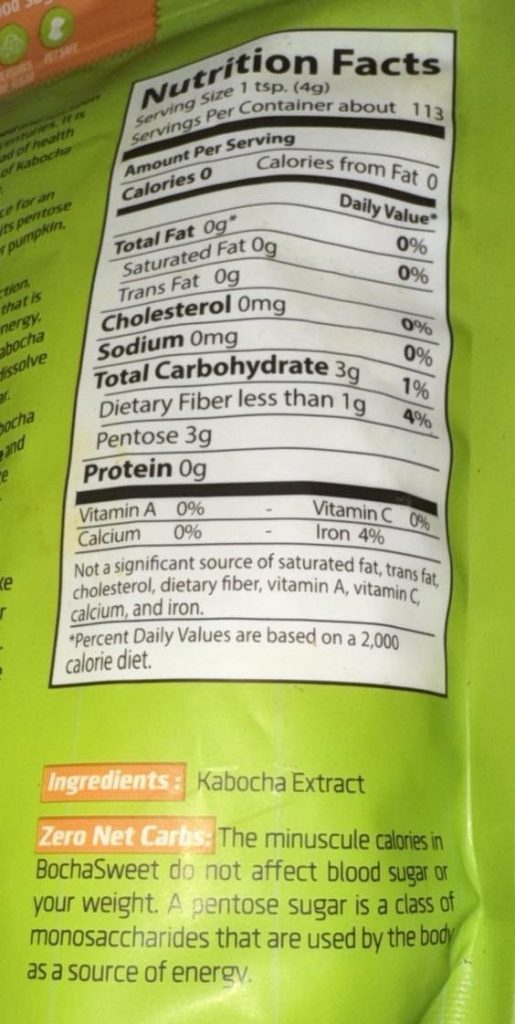
Labeling
On the first packages (we found this a few years ago) the ingredients were first listed as “Kabochu Extract: Pentose.” Later they added “xylose.”
Then the FDA stepped in and told them that if it contains xylose, it must be called xylitol.
Note: We just received a comment praising the FDA for stepping in, and informed us that they’re going to buy their “xylitol” elsewhere because it’s magnitudes cheaper than BochaSweet.
These kinds of comments on the web are ubiquitous, especially among the poorly educated (and those who don’t know how to use Artificial Intelligence . . . because they depend on natural ignorance).
So I’m going to give you a breakdown of all the sugars related to or derived from xylose:
- L-xylose: A synthetic mirror image of D-xylose, less common in nature.
- Xylitol: A sugar alcohol derived from xylose, used as a sweetener.
- Xylan: A polysaccharide made of xylose units, found in plant cell walls.
- Xylose oligomers: Short chains of xylose molecules, often formed during biomass processing.
- Xylose isomers: Variants like ribulose or lyxose that share structural similarities but differ in arrangement.
One more time: Xylose is not Xylitol, no matter what the FDA tells you.
The pentose in BochaSweet is related to xylitol and while it is nutritive, it doesn’t raise glucose levels nor does it raise insulin levels. Besides, recent research suggests that high intake of xylitol might increase cardiovascular risks due to its effect on platelet activity.
Benefits of BochaSweet
We’ve mentioned some, but here we’re going into details because BochaSweet also helps people with type one diabetes, and our FDA would jump down their throats were they to even mention this.
It helps to regenerate beta cells in the pancreas. Those are the cells that make insulin.
I interviewed a person who has type one diabetes and has been using BochaSweet for some time now. He told me how he had been taking 75mgs of insulin daily. After using this product for a year, his insulin requirement dropped to 12mgs.
I’ve got a list of supplements I take daily to reverse insulin resistance: alpha lipoic acid, biotin, chromium picolinate, milk thistle, American ginseng, and berberine.
But how they work is not exactly known. For instance, do any of them or all of them go to the brain to turn off insulin resistance? We don’t know. But from the Chinese studies, BochaSweet does that.
Someone pointed out to me that BochaSweet has 2 net carbs per serving. This is interesting because it was why when I first found it I decided to use stevia instead. But a while back, I had a talk with a food scientist (and I didn’t write it down!) who told me that when adding up the carbs in a recipe, if something has a few carbs but doesn’t raise blood sugar or stimulate the release of insulin, you don’t have to count them.
Now for the Cons
Yup, you heard the pros but you must know there is one con.
Sugar and yeast work together, but BochaSweet does not work with yeast. Though nutritive, it just doesn’t feed the yeast and let me tell you we’ve tried and tried. I just made our Omega Muffins and they did not rise (they were concave, in fact). Apparently it doesn’t seem to work with baking soda and cream of tartar either. I’m going to have to work on that one. Perhaps go back to our original recipe of baking soda and baking powder.
Then, as we mentioned above, there’s the cost: $20/pound. But you’re worth it!
Toxic to Dogs?
Because we live in a litigious society, they post at their website that it is toxic to dogs. It’s probably not since it’s not exactly xylitol, but someone’s going to poison their dog with human scraps and who-know’s-what, and if they hadn’t posted at their site to not give to your dog, they’d get sued and the company would vanish.
It’s best to feed your dog food and treats that were made for dogs.
Great News: You Can Make Jelly!
For those of you who don’t make jelly, this won’t mean as much as it does for those of us who do.
Not all sweeteners jell (gel?) the same. Depending on the type of pectin and the type of sugar, all sorts of things can go wrong. I had a friend who’s business was making jelly and she found that cane sugar and beet sugar produce different results. I think it was the beet sugar that left hard chunks of crystals in her jelly. And then there’s erythritol (which we no longer use nor recommend).
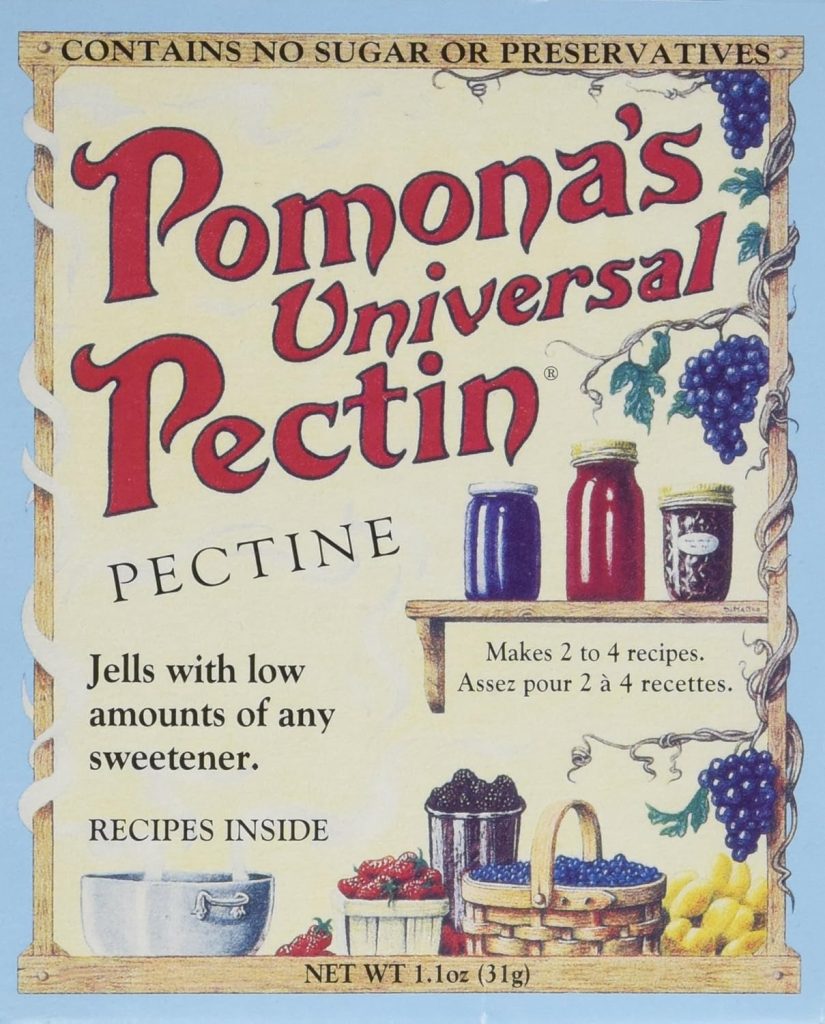
And not all pectin is the same. We used this one on the right, and you can click on it to get it thru our affiliate program. (Hey, we gotta pay for this website!)
Using erythritol, we made jellies perfectly, not a thing went wrong; but when opened, they heated up and poof . . . turned into crystal crap. Amazing stuff. We called Cargill’s food scientists (they make the stuff) and even sent them a bottle of our erythritol jelly. They told us they’d get back to us.
That was 12 years ago. So far, no call.
So, I’m having wild grape jelly on Hero toast (low carb, highly recommended even if they turned us down as affiliates) with my coffee this morning.
Summing it All Up
BochaSweet is the perfect sugar replacement. It is equal to sugar in sweetness. It is nutritious. Your cells get the sugars it needs for energy. It regenerates beta cells (the ones that make insulin). It works with the brain to reverse insulin resistance. People with type one diabetes will see that they require less insulin.
And it can help you to prevent and help reverse type two diabetes.
And because we have the FDA looking over our shoulder:
Disclaimer
All information provided here has not been evaluated by the U. S. Food and Drug Administration Nothing at this web site is intended to diagnose, treat, cure or prevent any illness or disease, and is not intended as a substitute for advice from your own physician or other health care professional. All information provided here is for information purposes only. Before beginning any diet, therapy, exercise program, or supplement you are advised to first check it out with a health care professional (hopefully one well versed in the route you choose to take).


David, I’m convinced that they have the progression of T2 backwards. I don’t think the weight gain causes it at all. I think the insulin resistance develops first. Once a body becomes insulin resistant, the pancreas produces more and more insulin. When it’s not taken up by the cells, and in turn, the cells don’t take in the glucose they need to function. Insulin will pack on the pounds, too. I find it ironic that diabetics are told to lose weight, while being treated with a substance than actively causes more fat storage. I think there’s a additional component of leptin resistance, which makes you feel hungrier, and delays satiety until after you’ve eaten way too much. My keto-ish diet addresses both, over time, but I still have some degree of insulin resistance.
There’s an Asian market in a town near me. I just recently found out it’s there, so next shopping trip I’m looking for kabocha, as well as big daikon radishes, and the even larger Korean radishes. Cooked radishes, especially the larger ones, make a pretty fair substitute for potatoes. Weird, huh? But I’ve tried it with the smaller red radishes, and it amazed me. I always hated radishes, but they taste entirely different, cooked. They get soft like potatoes, too.
I use a lot of allulose, I can’t afford to go 100% Bochasweet, as much as I’d like. I can use allulose, or maybe just inulin for yeast bread. Allulose has another advantage. It will caramelize, like cane or beet sugar, and also makes a good pancake syrup, with the addition of maple flavoring.
I agree wholeheartedly about learning as much as I can about diabetes, and various herbs and nutritional supplements. I’m taking a ridiculous number of supplements. I recently added Akkermansia mucifilia (sp?) to help improve my gut microbiome. I take other probiotics too, and have made my own L. reuteri and L. gasseri yogurts before I got ill this last fall. I’ll be starting those up again, soon.
Boy, do I agree with you. I knew I was getting it all under control when I suddenly started to feel full before the meal ended. And yes, medicine should know that insulin is a fat storing hormone.
As for allulose, I have been experimenting with it. We’ve found it’s “hard crack temperature.” And it’s much cheaper than BochaSweet. Experimenting with Bocha, we went up to 330 degrees and never found it’s soft crack temp.
At our local co-op, we finally got them to carry purple potatoes, and if you search, I’ve written a paper on those. And thanx for the head’s up on cooked radishes. We’ve been using cauliflower. Find our recipe on Mashed Potato Surprise.
Get this: I fasted for three days, took my blood sugar, and it was 180. Apparently this has been passed to me through my genes. Seems everyone in the family is diabetic or borderline.
Good luck.
I am wondering what the shelf life of bagged bocha is. (Bocha Sweet has an expiration date but so does coffee, and I use coffee way past the date). But I’m not familiar with Bocha.
I will find out. Give me a couple of days.
I never got back to you because the people at the company never got back to me. So, I had to research this. First, it’s chemically stable. It doesn’t go bad, and it’s resistant to microbial growth. It’s expiration period is 2 – 3 years, and that’s all about freshness. It will harden into a rock (we let a bag sit for 2 years to see what would happen) and a good, strong blender will bring it back. And, as always, because it dissolves so slowly in liquids, we always recommend the powdered version.
I’m still confused by the xylitol/xylose difference. Your explanation wasn’t clear at all to me. From what you wrote, I see xylitol and xylose ARE the same…Please explain.
Also, is it kabocha or kabochu?
They are only the same to the FDA, chemically they are different. But still, don’t feed your dogs sweets. And it’s Kabocha, did I write kabochu? It’s been so long. I’ll have to look.
I see the error. You caught a typo. I worked my way thru college teaching and typing for a fee. I used to be very very good. But in my seventies, I’m typing lots of errors per minute.
I have T2 diabetes. I’m very good at keeping my a1c down through a low carb diet.
This is amazing, valuable information! I have been using mostly allulose, but wishing I could afford Bochasweet. I may have to reconfigure a few things to use more Bochasweet.
I will also be growing my own organic kabocha. I have bought a few at an Asian market. The dark green ones aren’t ripe yet, and don’t have a lot of flavor. If you just leave them on the counter until they turn orange, they’re ripe and delicious.
They store beautifully, if I get a good crop, they might last almost long enough for the next harvest. I could also ripen and freeze some, to make sure.
One rule for certain if you have diabetes is to work as hard as you can learning everything you can and keep those carbs down. A problem I have is genetic. I fasted for three days, took my blood sugar reading and it was 180.
I asked my doctor about that and we had a good laugh because all he could say was, “Sucks to be you.”
I have T2 diabetes. If I wait too long between meals, or don’t eat soon enough after I wake up, my blood sugar gets higher. That’s because when your blood sugar starts to get low, your liver kicks out a form of glucose.
Doctors don’t tell you that. Most probably don’t know.
I tried a “conventional” diabetic diet, and it didn’t help. My a1c kept climbing. It was 8.6 when I switched to a keto-ish diet, I gradually got it down to 5.6.
After a different health crisis, (involved a dead gall bladder and sepsis) I had a couple of months of not eating much at all, and mosty carbs, because I could eat those and not puke. My a1c went up to 6.8. I’ve been back on keto-ish for almost 2 months and my a1c is currently 6.2, dp I’m getting it back down.
My primary care person is a nurse practitioner. She’s pretty good, but used to ask me if I’m following a “low fat diabetic diet.” I say, “of course not, it doesn’t work.” After seeing my a1c drop drastically, and seeing me lose almost 100 lbs, (80 more to go) she doesn’t ask me that anymore.
I’m going to switch to Bochasweet instead of allulose, as much as I can. Waiting for an order to arrive.
Ironic. I’m buying more and more allulose (powder) because I can’t afford the BochaSweet.
And you’re right. They’ve not come up with a good diet for diabetics. Their first goal is medication. We are an overmedicated population.
I’m beginning to believe we are a world poisoned by greed. When the majority scrapes by, hardly able to feel at peace, there is a whole buttload of greed on one end of the spectrum, and not that far down on the other side is a whole buttload of pain.
Ever a fountain of knowledge! Thanks for taking the time to explain in detail your many and truly interestingdiscoveries, David.