
At 75, I’m enormously bored with life. My eyes are not good . . . can’t read for more than a few minutes. I love world literature, just can’t do it anymore. So I’ve become a cinephile. A movie lover. Maybe a telephile (not a mainstream word).
Most of television aims for the largest audience using current trends, and is often dumbed down and formulaic. Breaking Bad brought back the antihero and suddenly all our heroes were bad boys. [In ’78 I wrote a short story in which the main character was an antihero, very unlikable.]
The weirdo trend was short lived, thank god. Just having a weird character doesn’t make a series more interesting. I recently started “The Chair Company” on HBO but found it ridiculous and dreadful after three episodes. So, I’m bored . . . and last night I fell back on learning something. Ya know? Like on PBS? The Nova series?
I caught three or four episodes before I fell asleep. In fact, an episode on quantum physics inspired me to order a very expensive “comic book” or graphic novel. It’s written and drawn by Clifford V Johnson, a physics professor at the U of Southern Cal. And he loves drawing.

But it was the episode on DNA that really caught my attention. For one thing, the lead scientist was a black sheep. He never fit in at college, he was laughed at by his professors, he propounded what everyone thought were absurd theories, and finally he dropped out of school. He eventually and reluctantly came back and decided, screw them, I’m going to find ancient DNA.
You see, the basis for Jurassic Park the movie is an absolute fiction. We will never find DNA from dinosaurs because DNA is fragile. Prior to 2022, the oldest DNA ever recovered was from a frozen mammoth is Siberia, about 1.2 million years old.
DNA from dinosaurs cannot survive. Again, it is very, very fragile.
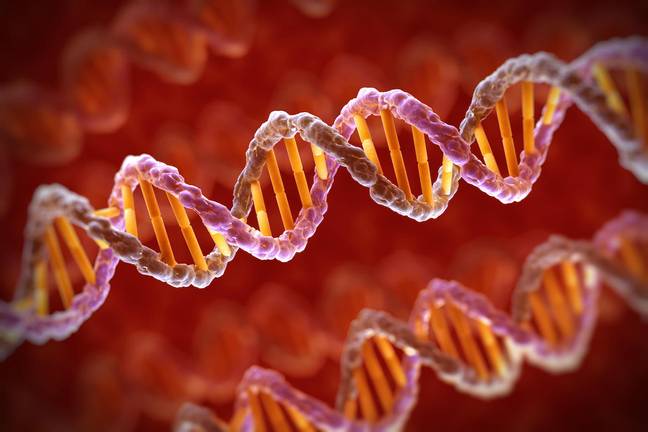
I’m sure you all know about the double helix (we’ll all die with that still in our heads from our first biology class). It’s like a twisted ladder, right? When DNA is found, it must have at least 100 pairs (100 rungs on that ladder) to be useful, or to reconstruct the plant or animal it belonged to.

Danish scientist, Eske Willerslev was that lead scientist, the failure in college whose crazy theories were laughed at by professors and colleagues alike. I was glued to the damn TV when he spoke, because he was brilliant, honest, and delightful. He decided to go to Greenland and search through the mud. He found DNA that was two million years old, far older than anyone ever thought possible. But it was extremely short chains, just 30 – 50 base pairs (rungs on that ladder). They found so much DNA but all too short to work with.
Being a computer wiz, retired, I figured they could input everything they found and let a computer put it all together, but I kept watching and learning how they struggled for some 15 years till a brand new grad student (so many just left frustrated, and some even went into different fields) suggested they “shotgun sequence” the DNA. I’d never heard the term. It means inputting all the fragments and letting the computer figure it out. And then Eske looked at the camera and said it was brilliant and so simple and he wondered why nobody had thought of it. I thought of it, but then my background in ancient DNA is nil while my background in computers is extensive.
The results?
They were hoping to get DNA from the Pleistocene Epoch, the great ice age, 2 million years ago. But instead, their samples reached into that late Pliocene Epoch, some 2.6 million years and what they learned is mind blowing.

They knew that camels were living in the woods and forests back then, though we seem to associate deserts with camels. What they found was the DNA to the things these herbivores ate, the rice, the wheats, the grains.
The Pliocene Epoch contains information we really need now, because the earth had warmed to where we are now, and the amount of carbon dioxide was high, about 400 ppm. Today we’re at 427 ppm.
Get this: The DNA sequences from grains of that period can be used today to modify (genetically alter) the grains today so they can grow under extreme heat.
This is what I found amazing. A failing biology grad, gets a crazy theory, and he ends up giving us hope for our future . . . which we are entering right now. How freakin cool is that?
If you have access to PBS, the series is NOVA and the episode is, “Hunt for the Oldest DNA”.


